
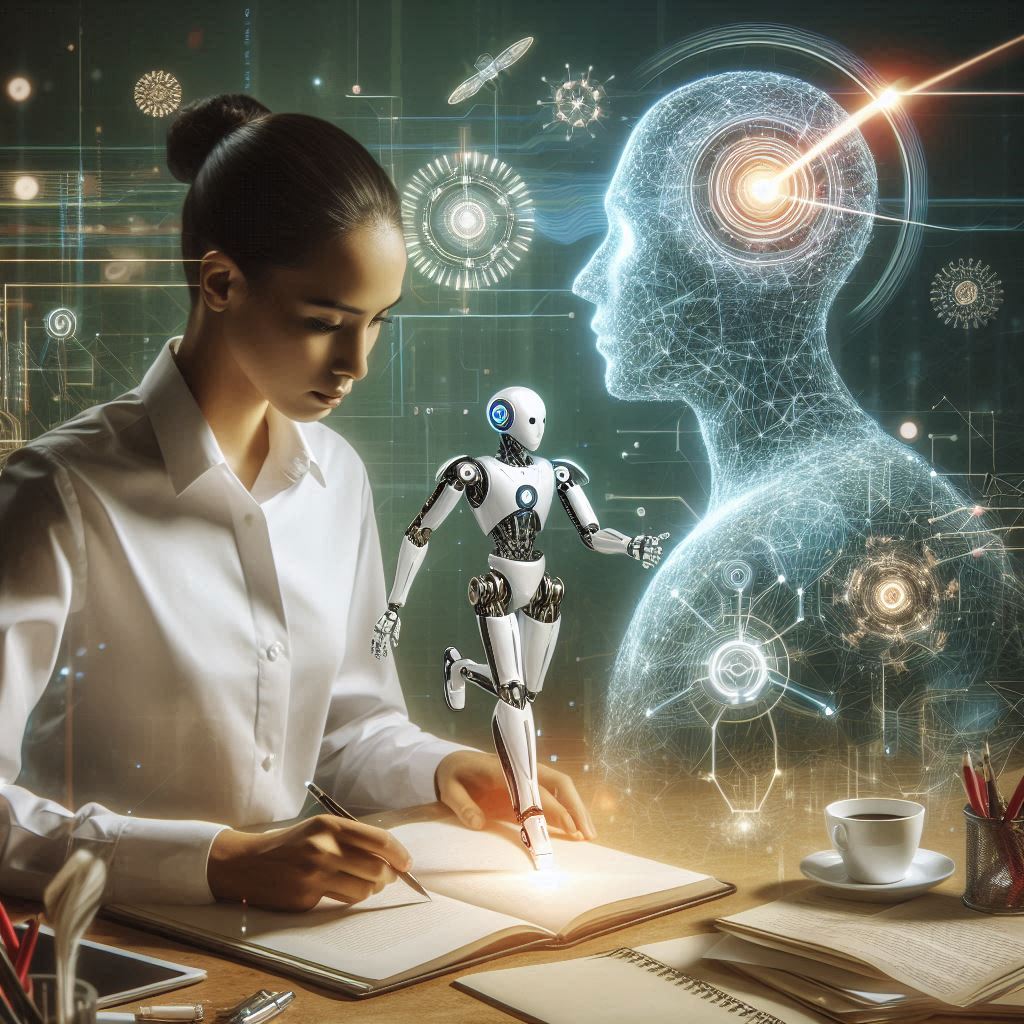
The advent of artificial intelligence (AI) has ushered in a new era of technological advancement, promising unprecedented opportunities for progress. One of the most prominent trends in this era is the increasing emphasis on human-AI collaboration. While this collaboration holds immense potential to enhance efficiency and drive innovation, it is essential to approach it with caution and consider the potential drawbacks.
The Benefits of Human-AI Collaboration
AI systems can augment human capabilities in various ways. Their ability to process vast amounts of data, identify patterns, and make objective recommendations can significantly benefit knowledge workers, managers, and companies. For instance, AI can support tasks such as data analysis, risk assessment, process automation, and personalized marketing. By automating routine and repetitive tasks, AI can free up human capital for more creative and strategic endeavors, fostering innovation and progress.
The Risks of Overreliance on Human-AI Collaboration
While the benefits of human-AI collaboration are undeniable, it is crucial to recognize the potential risks associated with an overemphasis on this paradigm. One of the primary concerns is the neglect of uniquely human skills. While AI excels in processing quantitative data, it often falls short in replicating human intuition, emotional intelligence, and creative problem-solving abilities. Overreliance on AI could stifle the development of these critical thinking skills, leading to a workforce that is less adaptable and innovative.
Furthermore, there are inherent limitations of AI. Despite sophisticated algorithms, AI systems are built upon data that can be biased or limited in scope. This can lead to biased or inaccurate outputs, highlighting the need for human oversight to ensure the ethical and responsible use of AI.
A Balanced Approach to Human-AI Collaboration
To harness the benefits of AI while mitigating the risks, a balanced approach is essential. Instead of solely focusing on collaboration, it is crucial to foster independent human skills, recognize the inherent limitations of AI, and ensure appropriate human oversight. By doing so, we can create a future where human ingenuity and technological innovation coexist harmoniously.
Conclusion
The future of work is inextricably linked to human-AI collaboration. While this collaboration offers immense potential for progress, it is essential to approach it with a balanced perspective. By recognizing the benefits and risks, fostering human skills, and ensuring appropriate oversight, we can harness the power of AI to create a better future for all.
Sources
- “Digital Management Practice: Mastering Exponential Change with Collective and Artificial Intelligence” by Adrian Vogler.
I turn what I go through into experience I can use.
I turn these experiences into wisdom, a kind of learned understanding.
This wisdom helps me make better choices.
Sharing this wisdom helps others navigate their own experiences. Thus, by teaching them, I solidify my own knowledge even further.
It’s a continuous loop of growth.